Düsseldorf Airport Arrivals: Two Stations, Three Terminals
Düsseldorf has two rail stations with near-identical names, and only one is at the terminal. Not knowing that leaves you standing after a long-haul flight, suitcase in hand, waiting for a train that will not take you where you want to go.

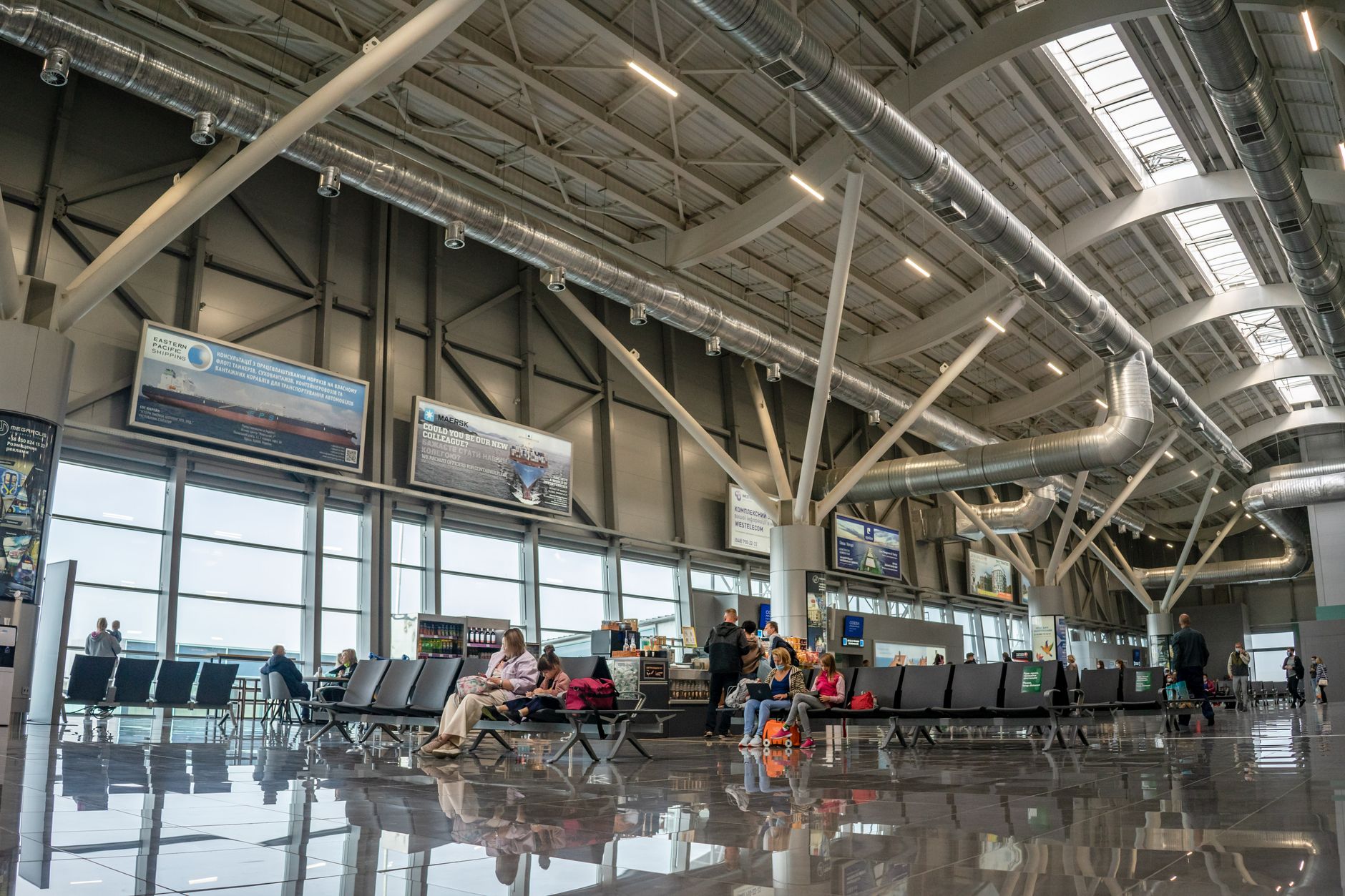
Düsseldorf Airport is straightforward once you have grasped one thing: there are two railway stations here, their names resemble each other, and they are not in the same place. Almost every unpleasant experience at this airport traces back to that confusion.
Everything else — terminals, baggage, distances — is manageable. Even so, let us start with arriving, because the order in which you move through it differs from the order on a site plan.
Which terminal, which airline
Strictly speaking, Düsseldorf has a single terminal with three piers (Flugsteige), A, B and C – which is what the airport itself calls them. Bookings and many portals call them Terminals A, B and C, though, and that’s how we use the terms here. The allocation follows the airline alliances — not nationality and not destination.
Terminal A is the base for Lufthansa and Eurowings and other Star Alliance members.
Terminal B is used by members of the oneworld and SkyTeam alliances, among them British Airways, KLM, Finnair, Iberia and Air France.
Terminal C mainly serves flights from outside the Schengen area operated by carriers that are not Star Alliance members.
On arrival this allocation matters less than on departure — you are directed to wherever your aircraft has parked. It becomes relevant if somebody is collecting you: tell them the terminal, not just the flight number. The three terminals are connected, but the arrival areas are some way apart, and “I’m at the exit” is not a usable location in Düsseldorf.
A second point for anyone collecting: non-Schengen arrivals add passport control. The gap between landing and appearing in the arrivals hall is then considerably longer than for a flight from Munich.
How long the baggage takes
One reassuring fact first: unloading generally begins while passengers are still disembarking. The belt does not start when you arrive at it — the process began before you left the aircraft.
It still takes time, and the reasons are mechanical: a full long-haul aircraft holds several hundred bags, unloaded by container, transported, and fed onto the belt. Twenty to thirty minutes after disembarking is normal, and more on a full flight.
On the arrivals level there are baggage trolleys right at the belts. That sounds trivial but is where people walk unnecessary distances: fetch a trolley before you take your bag off the belt, not afterwards.
The practical rule for anyone collecting stays the same as at any airport: set off not when the aircraft lands but when your passenger is at the belt. How that plays out elsewhere is described in Hamburg Airport: arrivals and baggage.
The two stations — the actual point
Now the part that sets this airport apart and costs the most time when you do not know it.
Düsseldorf Flughafen long-distance station sits at the eastern end of the airport grounds — not at the terminal. This is where ICE and IC services call. From the terminal you reach it only by SkyTrain.
The S-Bahn station at the terminal is a different station, immediately beside the building. From there you travel into the region, including central Düsseldorf.
So if you are continuing by ICE, you need the long-distance station. If you are heading into the city, you do not. That distinction appears on no ticket, and the names are no help in telling them apart.
Check which station your ticket names before you start moving. It is the half minute that saves you twenty.
The SkyTrain: seven minutes, and when it runs
The SkyTrain is the elevated shuttle linking terminal, car parks and the long-distance station. The ride from the long-distance station to the terminal takes seven minutes.
The operating hours are generous: it runs daily from 3.45am to 0.45am, every five to seven minutes depending on passenger numbers. Average waiting time is about three minutes.
For your planning: allow roughly ten to twelve minutes from the long-distance station into the arrivals hall — wait, ride and walk. That is not much, but it is not nothing, and anyone planning an ICE connection to the minute is planning too tightly.
One note for the early morning and late night: the SkyTrain does not run between 0.45am and 3.45am. If your flight lands at one in the morning and you want an early long-distance train, that is the gap that destroys your plan. Establish beforehand what the airport offers overnight — improvising at two in the morning goes badly.
If your bag does not arrive
The case nobody plans for, and one that occurs more often at a connecting airport like Düsseldorf than people expect.
Report the loss before leaving the baggage area. That is the decisive point: there is a baggage tracing desk in the arrivals area, and that is where you file the report. Ring from home instead and the process becomes considerably more involved, with the burden of showing the bag was missing at all falling on you.
You receive a reference number for tracking the status. Most delayed cases turn up within one or two days — they are rarely lost, usually just left behind at the connecting airport and forwarded on the next flight.
Two things you can do in advance that defuse this entirely: photograph your case before checking it in, and pack the essentials in your hand luggage — medication, chargers, a change of clothes. It sounds like a frequent flyer’s precaution and it is the only preparation that actually helps when it happens.
Keep the baggage receipt you were given at check-in as well. It is the proof of consignment and is needed when you file.
If you are collecting someone
Three things separate a relaxed collection from an expensive one.
Check the arrival status before setting off, and add the baggage time. An aircraft landing on schedule does not mean your passenger will be outside in ten minutes.
Agree the terminal, not just the time. In Düsseldorf that matters more than at smaller airports.
Use the short-stay zone deliberately. The first few minutes are free or cheap at most German airports, after which a tariff applies that was not designed for waiting. If the arrival slips, go round again or move to a regular surface — cheaper in the end than half an hour in the drop-off zone. How these tariffs are typically built is set out in parking at Munich Airport.
Onward travel: what is quick from Düsseldorf
Düsseldorf is among the best-connected airports in Germany, and that comes from sitting in the middle of a conurbation.
From the long-distance station you can reach the whole Rhine-Ruhr region and much of Germany beyond without changing. For travellers whose destination is not Düsseldorf itself that is a real advantage: you land and are on a long-distance train twenty minutes later.
The S-Bahn at the terminal puts you in central Düsseldorf within minutes. For a city break you need neither taxi nor hire car.
And if you are being collected by car: the airport sits directly on the A44 with links to the A52 and A57. Convenient — but this is also the Rhine-Ruhr, and at rush hour the train is the more dependable option.
How arrivals work at a smaller, three-part terminal system with a shared arrivals level is set out under Hannover Airport arrivals. For the return journey, with its three pier checkpoints, the DUSgateway time slot and the SkyTrain in the other direction, see Düsseldorf Airport departures.
All details reflect the position in 2026. Terminal allocations change when airlines switch alliance, and the airport adjusts operating hours; check before travelling. What does not change is the single distinction that defines this airport: long-distance station via SkyTrain, S-Bahn at the terminal. Know that and Düsseldorf holds no detours. More locations are covered under The Airports, and arrival procedures generally under Arrivals & Baggage.
Keep reading
Arrival & Baggage
Stuttgart Airport Arrivals: level 2, two halls and three ways into the city
Arriving at Stuttgart Airport in 2026: baggage reclaim and exits in Terminals 1 and 3 on level 2, customs and EES, pick-ups with 8 free minutes or an hour on P0, S2/S3, the U6 since 2021, the N8 night bus and taxis.
Sophie Bauer25 September 2026
Arrival & Baggage
Arriving at BER Airport: One Level, Two Exits, Two Terminals
Arriving at Berlin BER in 2026: baggage reclaim on level E0, eight belts in Terminal 1 and three in Terminal 2, the station two levels down, the FEX to Hauptbahnhof in 23 minutes — and the meeting point almost everyone gets wrong.
Sophie Bauer17 September 2026
Arrival & Baggage
Frankfurt Airport Arrivals: Terminal 1 or 3, Baggage, Customs and the Way Out
Arriving at Frankfurt Airport in 2026: where you land now Terminal 2 has closed, how passport control, baggage reclaim and customs work, and how to get onward from Terminal 1 and Terminal 3.
Sophie Bauer25 September 2026
Arrival & Baggage
Arriving at Hamburg Airport: From Gate to City Centre in 40 Minutes
Arriving at Hamburg Airport: central baggage reclaim, the S1 to the main station in 25 minutes, taxi fares — and the train split that catches people out.
Sophie Bauer14 August 2026
Arrival & Baggage
Arriving at Hannover Airport: Three Terminals, One Arrivals Level
Arriving at Hannover Airport in 2026: Terminals A, B and C share one arrivals level, plus baggage claim, customs and the S5 to Hauptbahnhof in around 17 minutes.
Sophie Bauer19 August 2026