Berlin-Tempelhof Airport: History, the Airlift and Tempelhofer Feld Today
No aircraft has taken off here since 30 October 2008 — yet Tempelhof matters to Berlin's aviation history more than almost anywhere else: stage of the 1948/49 Airlift, Nazi-era monumental building, and today Berlin's largest park.

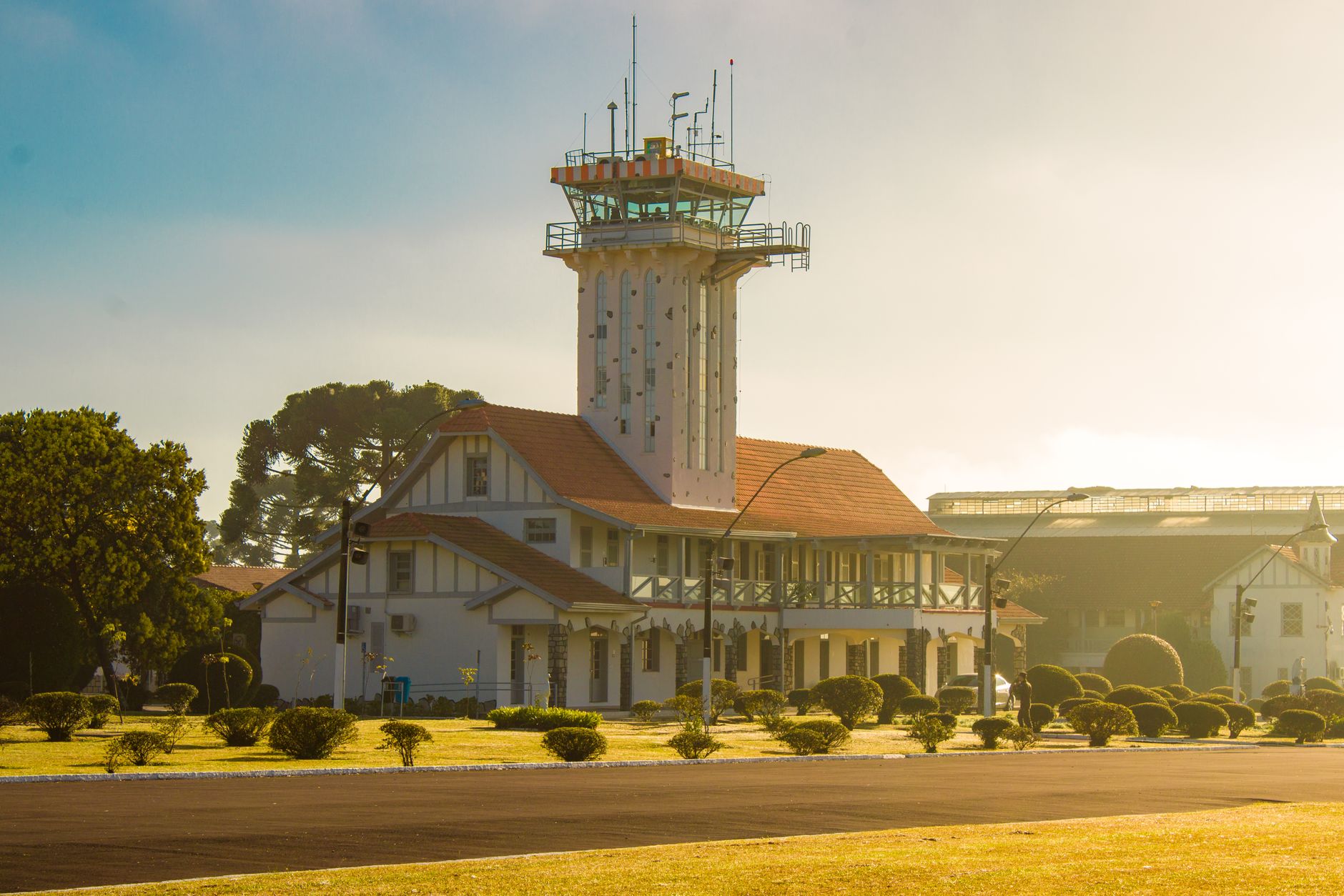
Everywhere else on this site, it’s about gates, car parks and connecting trains. Not at Tempelhof: no aircraft has taken off here since 30 October 2008, and yet this airport still belongs in an overview of German airports, for a simple reason. Hardly anywhere else in Germany tells the political story of 20th-century flight so directly: Nazi-era monumental architecture, the rescue of a besieged city from the air, and decades afterwards as a symbol of a divided and then reunified capital. Today the runway has become Berlin’s largest park, and the terminal a venue for tours, trade fairs and Formula E races. To understand why today’s airport was built the way it was, it helps to know what came before it, at Tempelhof.
From the Weimar Era to a Nazi Monumental Building
Tempelhof is older than the current building suggests. The field was officially designated an airport back in 1923, in the middle of the Weimar Republic, as Berlin rose to become one of Europe’s busiest aviation hubs. The first permanent terminal opened in 1929 — but that isn’t the building still standing today.
What you see standing at Platz der Luftbrücke dates from the Nazi era. In 1935, the Reich Aviation Ministry under Hermann Göring commissioned architect Ernst Sagebiel with a complete rebuild, constructed between 1936 and 1941 — and, because of the war, never quite finished even to this day. The result is enormous: a roughly 1.2-kilometre, crescent-shaped façade of shell limestone, backed by around 307,000 square metres of floor space. For two years, before the Pentagon was completed, it was the largest building in the world by floor area; it still ranks among the twenty largest buildings anywhere. British architect Norman Foster once called it “one of the truly great buildings of modernism” — a notable compliment for a structure originally conceived as a stage for Nazi propaganda and as an arms plant: bombers were assembled in its halls, using forced labourers held in camps on the site. The entire complex has been a listed building since 1995 — one reason so little of it has been allowed to change since.
The 1948/49 Airlift: Berlin’s Rescue From the Air
The story that made Tempelhof famous worldwide plays out just a few years later. On 24 June 1948, Soviet occupying forces closed off every land and water route into West Berlin — the Blockade. Two days later, on 26 June 1948, American and British forces began what would go down in history as the Berlin Airlift: supplying roughly two million people entirely by aircraft, via Tempelhof, the British airfield at Gatow, and later Tegel.
Tempelhof was the central hub. Between July and September 1948, the Allies built an entirely new, 1,800-metre asphalt runway specifically to let the heavy, four-engined C-54 aircraft land at all. At the operation’s peak, an aircraft touched down roughly every 90 seconds — across all three airfields combined, more than 200,000 flights delivered up to 13,000 tonnes of coal, food and other supplies to Berlin on the best days. The Soviet Union lifted the blockade on 12 May 1949, but flights continued until 30 September 1949 to build up reserves for winter.
One footnote from that period became especially famous: American pilot Gail Halvorsen began dropping sweets to children at the runway fence on small parachutes — the origin of the nickname “Raisin Bomber” (Rosinenbomber). At Platz der Luftbrücke, right in front of the terminal, the Airlift Memorial has stood since 1951 — known locally as the “Hunger Rake” — commemorating those who didn’t survive the operation: 39 British and 31 American airmen killed in crashes are named on it.
The End of Flight Operations: 30 October 2008
After the Airlift, Tempelhof stayed in operation for decades — first as a US Air Force base, which the Americans didn’t finally leave until 1993, then as a smaller civilian airport mainly for business and short-haul flights. The runways were too short for modern wide-body jets, the location in the middle of a densely populated district drew constant noise complaints, and Berlin’s Senate decided early on to concentrate all of the city’s air traffic on a single new major airport in the long term.
The closure wasn’t entirely uncontested. On 27 April 2008, Berliners voted in a referendum on whether Tempelhof should stay open — 60.2% of votes cast were in favour. Even so, the referendum failed: with turnout of only 36%, the “yes” votes amounted to 21.7% of eligible voters, short of the required 25% quorum. Legally, the closure stood unchallenged. On 30 October 2008, the last scheduled passenger flight departed at 10.17pm — a Dornier 328 operated by Cirrus Airlines, bound for Mannheim — and that was it.
The bitter irony of that decision only becomes clear in hindsight: the new major airport Tempelhof was meant to make way for was the future BER — and it didn’t open shortly afterwards at all, but twelve years later, in October 2020. How that came about, and how Berlin Brandenburg Airport has developed since, including its own notoriously delayed construction history, is covered in the full overview. For twelve years after Tempelhof’s closure, Berlin had only two airports left, Tegel and Schönefeld — both themselves history now too.
Tempelhofer Feld: Berlin’s Largest Inner-City Open Space
After closure, not much happened at first — the vast runway sat largely unused for two years. It then opened as a public park on 8 May 2010: around 235,000 visitors turned up on the very first weekend alone, more than anyone had expected. At roughly 355 hectares, Tempelhofer Feld is today one of the largest inner-city open spaces in the world — bigger than Central Park in New York, right in the middle of a European city of millions.
That this park exists in this form at all isn’t a given. In the early 2010s, the Senate planned, under the name “Tempelhofer Freiheit”, substantial development around the edges with housing and a new state library. Against that, the citizens’ initiative “100% Tempelhofer Feld” formed and forced a referendum. On 25 May 2014, 64.3% of Berliners voted to keep the entire field free of development — this time with a binding result. Since then, the Tempelhof Field Act has made building here legally off-limits. There was one significant exception: between 2015 and 2018, several hangars served as emergency shelter for up to 1,200 refugees, before that use wound down. The open field itself is managed today by the state-owned Grün Berlin GmbH, while the separate Tempelhof Projekt GmbH looks after the terminal building — two different bodies responsible for one connected site.
Cycling, Skating, Kite-Flying: What’s Allowed on the Runway
What makes the former runway so distinctive today is exactly what makes an airport an airport: kilometres of completely flat, car-free tarmac right in the middle of the city. A roughly six-kilometre loop along the old perimeter track suits cycling, skating, jogging and longboarding — flat, with no junctions and no traffic lights, ideal for anyone who just wants to cover distance, and just as suited to families with children on balance bikes.
The second big advantage is the wind. With nothing on the open field to slow the gusts, Tempelhof is one of the best spots in Berlin for flying kites — from classic sport kites to kite buggies rolling across the former apron. Picnic meadows stretch across large parts of the site, alongside roughly 2.5 hectares of designated barbecue areas and a dog-exercise zone of around 4 hectares.
At the same time, the field is far from purely a recreation ground — it’s also a nature reserve. Skylarks nest directly on the ground in the sparse meadow areas, a bird that otherwise struggles to find such open space this close to a city centre. During the breeding season in spring and summer, individual meadow sections are cordoned off as a result, followed by the annual mowing in August to maintain the grassland. Cyclists barely notice — the marked paths stay open — but it’s worth respecting the barriers rather than treating them as an inconvenient detour.
Gardening Between the Runways: The Allmende-Kontor
At the eastern edge of the field, near the Oderstraße entrance, sits one of the most unusual projects on the whole site: the Allmende-Kontor, founded in 2011 and today one of the largest community-garden projects of its kind in Europe. The name says it all — “Allmende” historically means land held in common — and that’s exactly how the garden works: members tend their own plots but jointly look after paths, tool sheds and the shared infrastructure in between.
Because you can’t simply plant into the old runway’s asphalt, the Allmende-Kontor works consistently with mobile raised beds — a practical solution that has since become something of a trademark for the place. New members are explicitly welcome: rather than a rigid, years-long waiting list like a classic allotment, the association allocates free plots at set allocation dates, usually in spring when the new season begins. Anyone who just wants to look can visit during open hours and take a walk round before deciding whether to take on a plot of their own.
Smaller garden and school projects are scattered across other parts of the field, but the Allmende-Kontor remains the best known and longest-established — and a good example of how versatile a former runway can be, without any of it involving new construction.
The Terminal Today: Tours, the THF Tower and Formula E
The monumental terminal building itself isn’t simply standing empty either. The starting point for a visit is the CHECK-IN visitor centre at Platz der Luftbrücke 5, open Wednesday to Monday from 10am to 5pm, closed Tuesdays (as of 2026).
Public tours set off from there, and unlike a conventional museum, they offer quite different ways into the building. Options include an overview tour called “Mythos Tempelhof”, a tour of bunkers and underground spaces called “Verborgene Orte” (Hidden Places), an aviation-history tour past preserved aircraft — including a C-54, an Ilyushin Il-14 and a Focke-Wulf — and a tour that addresses the site’s Nazi-era history and forced labour directly and without softening it. Most standard tours run around two hours, but there’s also a shorter version called “THF in 60 Minutes”, an English-language tour, and an evening torchlight tour for families. Groups book through Museumsdienst Berlin; slots run most days except Tuesdays.
For anyone after height rather than history, the THF Tower is open to visitors Wednesday to Sunday from 11am to 6pm (as of 2026), giving a view across the whole field. The building also regularly serves as a backdrop for trade fairs, concerts, exhibitions and film shoots. And once a year, the former apron becomes a racetrack: Formula E’s Berlin E-Prix has run on the site since 2015 — the only venue to have featured in every single season since the series launched in 2014.
Getting There, Entrances and Opening Hours
Ten entrances are spread around the field, so you’re rarely far from the next gate. The most direct route is by U-Bahn: the U6 stops both at Platz der Luftbrücke, right by the visitor centre and the Airlift Memorial, and at Paradestraße on the western edge of the field. Tempelhof S-Bahn station, served by the Ringbahn as well as the S45 and S46, sits at the north-western corner. On the eastern side, along Oderstraße, several further gates line up, including the main gate known locally as the “Crash Gate”, plus an entrance on Columbiadamm to the north.
The field is open from early until late, roughly from sunrise to sunset — considerably longer in summer than in winter. Because these times shift with the seasons, it’s worth a quick check of Grün Berlin’s current listings just before visiting (as of 2026). Entry to the open field is free, year-round; only the terminal tours and individual special events charge admission, with prices depending on format and length.
Cars stay outside — the whole field is car-free, with parking on the surrounding streets. Anyone arriving by bike can bring it straight in through several entrances, often getting around faster than any motorised approach.
Unlike the Munich Airport visitors’ park, where a euro buys you a hilltop view of today’s departures, there isn’t a single active flight left to watch at Tempelhof. What remains is still more than a decommissioned site: a building that combines Germany’s darkest architectural era, the Cold War’s most spectacular civilian rescue operation, and one of Berlin’s most successful citizens’ referendums — and a park where all of that sits quietly in the background while someone flies a kite or waters their vegetable plot. Anyone landing in Berlin today does so at BER, in the south-east of the city. Anyone wanting to understand why, and how long the road there was, will find the answer right in the middle of the city, on a runway that will never carry an aircraft again. Further German airports are covered under The Airports.
Keep reading
The Airports
Berlin Brandenburg Airport: Terminals, History and Getting There
Berlin Brandenburg Airport (BER): Terminal 1 and 2, fourteen years of delays before its 2020 opening, 26 million passengers in 2025, and how to reach the city.
Sophie Bauer21 July 2026
The Airports
Hotels at BER Airport: Which Ones You Can Actually Walk From
Hotels at Berlin Brandenburg Airport: the two houses on the Terminal 1 forecourt, the Schoenefeld and Waltersdorf ring, napcabs in the station, shuttle costs and park-sleep-fly compared.
Sophie Bauer17 September 2026
The Airports
Parking at Frankfurt-Hahn: Three Surfaces and the 60-Minute Rule
Parking at Frankfurt-Hahn airport: P1, P2 and P3 with walking times and weekly rates, the height limit in the multi-storey, and the check-in deadline since Nov 2026.
Sophie Bauer14 August 2026
The Airports
Frankfurt Airport 2026: Which Terminal, Which Route, How Much Time
Frankfurt Airport 2026: Terminal 3 is open and Terminal 2 shut. Which airline flies from where, how to move between T1 and T3, and how much time to allow.
Sophie Bauer14 August 2026
The Airports
Parking at Munich Airport: The Minutes You Have to Budget For
Parking at Munich Airport: which car park serves Terminal 1 and 2, how long the shuttle and the walk really take, and when to leave home for an early flight.
Sophie Bauer14 August 2026