Electric Toothbrush on a Plane 2026: The Battery Rules for Hand Luggage
It's not the toothbrush that's the problem at security, it's the battery inside it — and that's governed by an entirely different set of rules to liquids or case dimensions. What actually applies to small electronics, power banks and e-cigarettes in 2026.

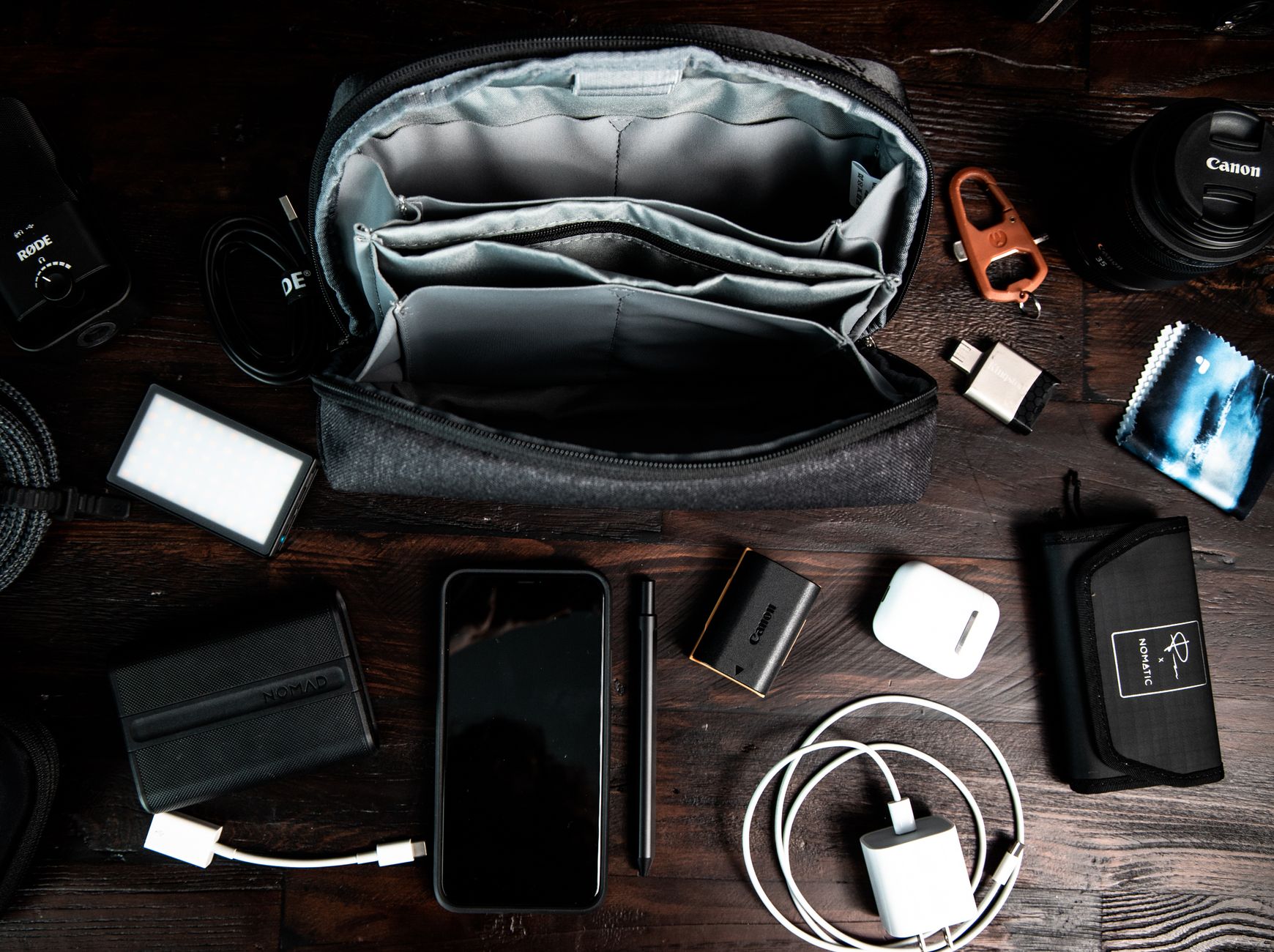
At the security checkpoint, the electric toothbrush usually slips through unnoticed inside the wash bag, wedged between the deodorant and the sun cream — all the attention goes to the clear bag and whether the shower gel bottle is still under 100 ml. But the toothbrush itself was never really the issue. What matters is the small component inside the handle: the battery. And that’s governed by an entirely different rulebook to liquids or case dimensions.
Knowing the liquids rule and the cabin bag dimensions still won’t tell you what’s allowed when it comes to lithium batteries. Power banks, e-cigarettes, shavers, wireless earbud cases, toothbrushes — all of it falls under the dangerous goods rules for batteries, and those don’t sort by volume or by centimetres. They sort by watt-hours, by loose versus built-in, and by cabin versus hold. Mix those three distinctions up and you either queue longer than you need to at security, or hand over a device at the gate that was actually allowed to fly.
Why Batteries Are a Category of Their Own
Liquids are a security risk because, in principle, they could be combined into an explosive. The risk with lithium batteries is different: damage, a short circuit or overheating can push a cell into thermal runaway, where it keeps heating itself until it ignites, and that kind of fire barely responds to a standard extinguisher. That’s exactly why international aviation authorities treat batteries not as ordinary luggage but as dangerous goods, regulated through ICAO’s technical instructions and IATA’s dangerous goods regulations. German airports apply these via EU aviation security law, enforced at the checkpoint by the Bundespolizei or contracted security staff — the same authority that enforces the liquids rule.
The reason batteries belong in the cabin rather than the hold wherever possible: a battery that starts smoking in hand luggage under the seat gets noticed by the crew before it spreads. In the hold, a fire can go unnoticed until it’s no longer containable. That logic runs through practically every individual rule in this article — it’s why power banks are banned from checked bags, why e-cigarettes can’t go in the hold either, and why the cabin remains the safer choice even for small devices.
Electric Toothbrushes, Shavers and Similar: the Built-in Battery
The toothbrush itself is, as a rule, the least troublesome device in this whole subject. Modern models from Oral-B, Philips Sonicare and comparable makers have a lithium-ion cell sealed into the handle, typically rated well under one watt-hour. For comparison, the 100 Wh threshold where restrictions even start to apply is a hundred times that size. The same goes for electric shavers, epilators, toothbrushes with a charging dock, and most wireless earbud cases: the built-in battery is so small it falls outside any quantity limit entirely.
Formally, devices with a sealed-in battery are allowed in both hand luggage and the hold. Even so, the standing advice from airlines and aviation security bodies hasn’t changed: anything with a battery goes in the cabin, where a fault gets noticed and dealt with. For a toothbrush that’s pure caution rather than a response to actual incidents — power banks are a different story, covered next. In practice this means you don’t need to take the toothbrush out or declare it at the checkpoint, and in the vast majority of cases it won’t raise a question on the X-ray image either. With bulkier items — an electric buffer, a shaver with an external charging base — staff occasionally ask you to switch the device on to show it’s genuinely functional rather than a shell. That mostly happens with laptops and larger electronics, but it’s worth keeping even small battery-powered devices charged enough to switch on regardless.
Power Banks: the Watt-hour Limit That Actually Matters
This is where things get concrete, and where most of the confusion happens. Lithium-ion batteries — which covers practically every power bank — sit under a three-tier system, measured in watt-hours (Wh):
Up to 100 Wh: no issue, no approval needed, carry as many as you reasonably need for personal use. The vast majority of ordinary power banks fall into this band.
100 to 160 Wh: only with the airline’s approval, and capped at two spare batteries per person. In practice that covers very large power banks, professional camera equipment and batteries for medical devices — not the standard charger from the electronics shop.
Over 160 Wh: banned outright, neither in the cabin nor in the hold, on any passenger flight.
The practical snag is that power banks are almost always labelled in milliamp-hours (mAh), not watt-hours. You have to convert it yourself, and the formula is watt-hours equals amp-hours times voltage. At the standard lithium-ion nominal voltage of 3.7 V, a 20,000 mAh power bank works out to roughly 74 Wh — comfortably under the limit. A 27,000 mAh bank already sits close to 100 Wh, and some of the largest models, 30,000 mAh and above, can tip over 100 Wh and land in the approval band without the size of the device making that obvious. Reputable manufacturers print the watt-hour figure directly on the casing for exactly this reason; if it’s missing entirely, the call falls to security staff at the checkpoint, and in the worst case that means confiscation rather than clearance.
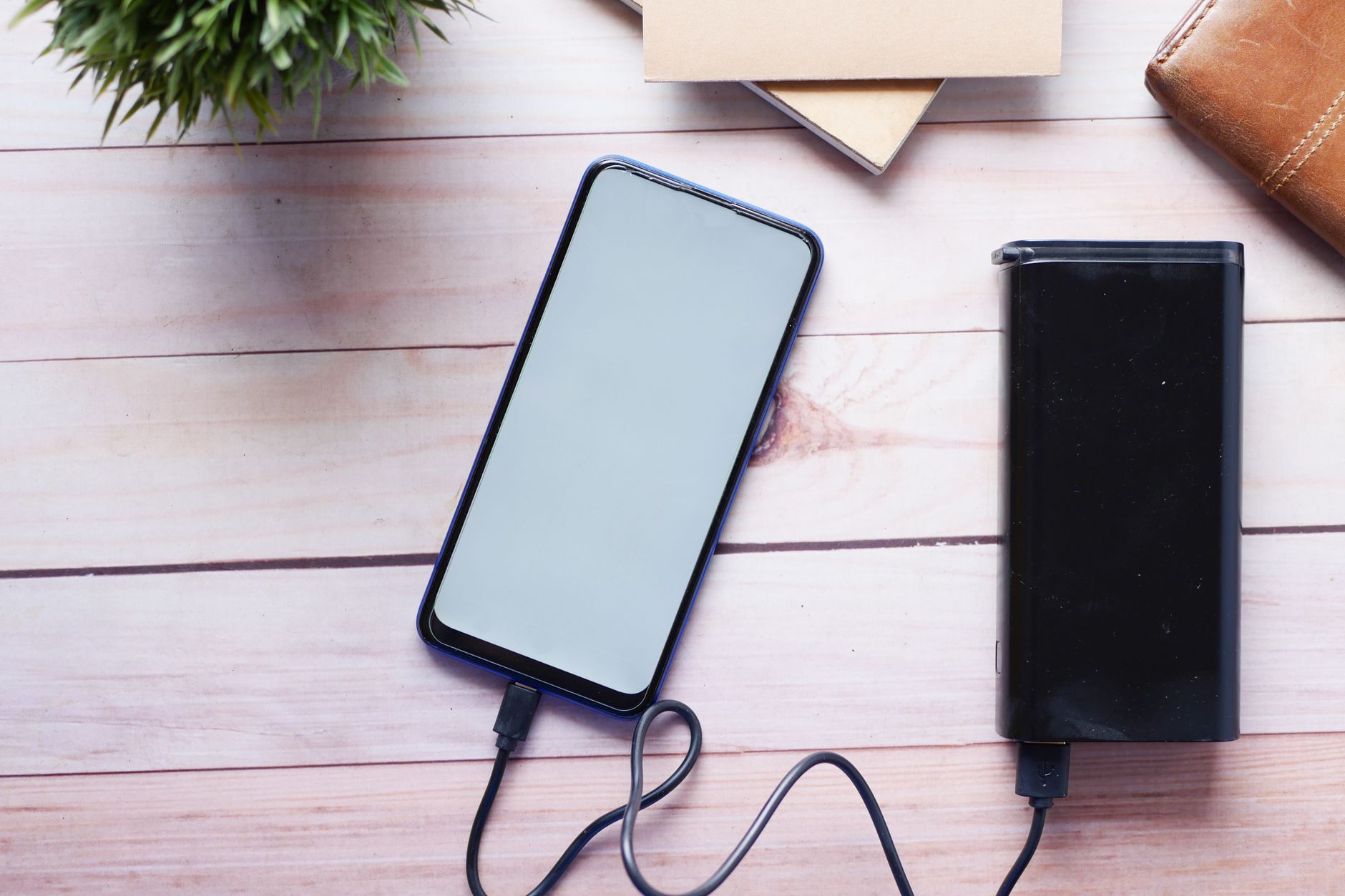
Regardless of the exact watt-hour figure, one rule has no exceptions: power banks belong in hand luggage, never in the checked case. If one turns up during hold baggage screening, the case is typically pulled from the loading system and has to be opened by hand — that costs time, and in unlucky cases enough of it that the case misses the flight even though you’re already on board. At some German checkpoints, larger power banks also have to go into the tray separately, much like a laptop, because their dense construction is hard to distinguish from other objects on the X-ray image. Which airlines have since 2026 also banned using a power bank on board or stowing it in the overhead locker is set out in the comparison of power banks on a plane.
E-cigarettes: the Most Misunderstood Rule
Few devices see as wide a gap between what people assume and what the rule actually says as the e-cigarette. The core of it is simple: e-cigarettes and disposable vapes belong exclusively in hand luggage, never in the checked case. This rule is stricter than for most other battery-powered devices, and it’s near-universal internationally, because there have been repeated cargo-hold fires in the past caused by e-cigarettes whose battery short-circuited under pressure from other items in the bag.
Two further rules get overlooked. First: you may neither use nor charge an e-cigarette on board. The ban on vaping in flight has nothing to do with the rest of the aircraft’s no-smoking status — it’s a safety rule, not a comfort one, because the smoke detector in the lavatory registers every puff of vapour and in-flight false alarms are taken seriously. Charging one via a power bank or the USB port at your seat during the flight is prohibited too. Second: the refill liquid follows the ordinary 100 ml liquids rule. Pack a 30 ml bottle of e-liquid and it needs the same clear bag as your shower gel and perfume — the liquids rules for hand luggage apply here exactly as elsewhere, regardless of the fact that the e-cigarette itself is governed separately by the battery rules. That overlap of two different rulebooks applying to a single device is precisely where most travellers trip up.
One thing worth knowing if you’re connecting onward: some destinations outside the EU ban e-cigarettes outright, including in transit, with confiscation at border control. Within Germany and the EU this isn’t an issue, but on a connection through a third country it’s worth checking that country’s entry rules beforehand — that’s research your airline won’t do for you.
Loose Batteries versus Built-in Batteries: the Difference That Matters
The single most important distinction in the whole rulebook is between a battery that’s sealed inside a device and one sitting loose in your bag. A built-in battery — in a laptop, camera, toothbrush or shaver — counts as part of the device and, as described above, is conditionally allowed even in the hold. A loose battery — a spare camera battery, a power bank, a spare cell for an e-cigarette pod — belongs in hand luggage without exception, regardless of its watt-hour rating.
The reasoning is the same one running through this whole topic: a loose battery can be damaged or short-circuited by other items in the case, while a built-in battery has at least some protection from the device’s own housing. Loose batteries carry an additional requirement that’s routinely ignored: the terminals must be protected against short circuits, either by the original retail packaging, an individual plastic bag per battery, or tape over the contacts. Toss several spare batteries loose into a wash bag, where they can rub against each other or against keys and coins, and you’re courting exactly the risk the whole rule exists to prevent.
In practice this matters most to travellers carrying camera gear, drones or tools with a swappable-battery system: if you’re bringing several spares for a camera or a drone, work out the combined watt-hours in advance and check with the airline if you’re unsure — drone batteries in particular tend to cross the 100 Wh mark sooner than their compact size suggests, especially in the larger models.
What Actually Happens at the Checkpoint
At the checkpoint itself, the battery check mostly runs in the background without you noticing it, as long as nothing stands out. Small devices like a toothbrush stay in the bag; bulkier, denser objects like power banks go into the tray separately on some lanes, much like a laptop or tablet. If something on the X-ray image can’t be identified with confidence, the bag gets opened by hand and the device is checked individually — with larger electronics that occasionally includes being asked to switch it on.
If a device is flagged as non-compliant — a power bank over 160 Wh, a loose battery with unprotected terminals, an e-cigarette found in checked luggage during the bag-drop X-ray — the options are practically the same as for an oversized liquid: leave it behind, go back to the check-in desk, or in rare cases arrange to have it posted home. There’s no compensation for this, because it’s a security decision rather than an airline one. If you’re travelling with substantial camera gear, several spare batteries or professional equipment, work it out at home while packing, with the manufacturer’s figures for each battery in front of you, rather than doing the sums for the first time at the gate.
How much time you should build in for security also depends on how full your hand luggage already is — with budget carriers, as set out under Ryanair hand luggage, the small free allowance often leaves little room for a power bank and charging cable, and that’s exactly where you want them within reach rather than buried at the bottom. In the end, the battery rule is simpler than it first looks: anything with a battery goes in the cabin, loose batteries travel with protected terminals, power banks under 100 Wh raise no questions, and e-cigarettes never go in the case. Hold onto those four points and the watt-hour table only matters for the rare edge case.
Whether the toothbrush and shaver even need to come out of the bag separately depends on the scanner type at the checkpoint; the detail is under airport security checkpoint.
All details are as of 2026, based on the internationally applicable ICAO and IATA dangerous goods rules for lithium batteries as applied at German airports. Individual airlines are increasingly tightening their own power bank policies on top of this baseline — some now ban stowing a power bank in the overhead locker during the flight or charging a device from one mid-air — so check your specific airline’s site before an upcoming trip, since those rules change faster than the underlying dangerous goods regulations themselves.
Keep reading
Departure & Security
Power Banks on a Plane in 2026: Cabin Bags, Watt-Hours and Which Airlines Ban Using Them
Power banks on a plane in 2026: cabin baggage only, two at most, the 100 and 160 Wh thresholds — and which airlines ban charging on board, from Lufthansa to Ryanair and Wizz Air (as of September 2026).
Sophie Bauer25 September 2026
Departure & Security
Food in Hand Luggage: What Gets Through Security — and What You Cannot Bring Home
Food in hand luggage 2026: why yoghurt, soft cheese and honey count as liquids at security, how the baby-food exemption actually works, and which foods the EU bans on the way back in.
Sophie Bauer17 September 2026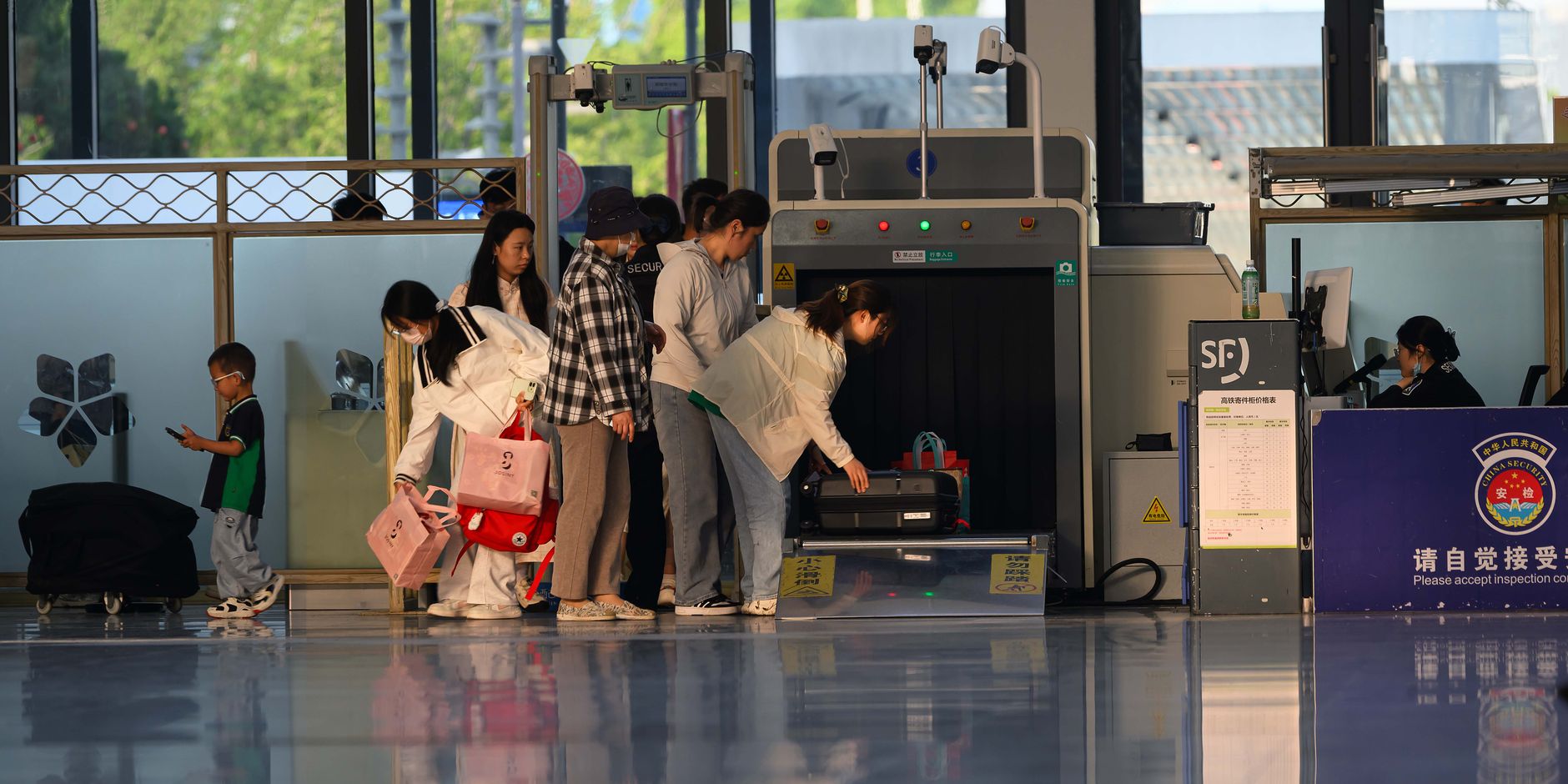
Departure & Security
Airport Security Checkpoint 2026: How the Screening Process Actually Works
Airport security in Germany 2026: body scanners instead of arches, CT scanners that let laptops and liquids stay put, realistic queue times, and pat-down triggers.
Sophie Bauer5 August 2026
Departure & Security
Wizz Air Hand Luggage 2026: 40 × 30 × 20 Free, a Trolley Only With WIZZ Priority
Wizz Air hand luggage in 2026: a free 40 × 30 × 20 cm bag up to 10 kg, a 55 × 40 × 23 cm trolley only with WIZZ Priority, what Priority costs online and at the airport, and what awaits at the gate (as of September 2026).
Sophie Bauer25 September 2026
Departure & Security
Eurowings Hand Luggage 2026: BASIC, SMART and BIZclass Compared
Eurowings hand luggage 2026: dimensions for the small bag and the cabin case, what BASIC, SMART and BIZclass actually include, plus a comparison with Lufthansa and Ryanair. As of 2026.
Sophie Bauer14 August 2026