Hand Luggage Sizes 2026: What Each Airline Actually Allows
One suitcase, six airlines, six sets of rules — and a sizer waiting at the gate. Since 19 May 2026, Lufthansa's cheapest fare no longer includes a cabin case. What applies now, and the dimensions that get you through anywhere.

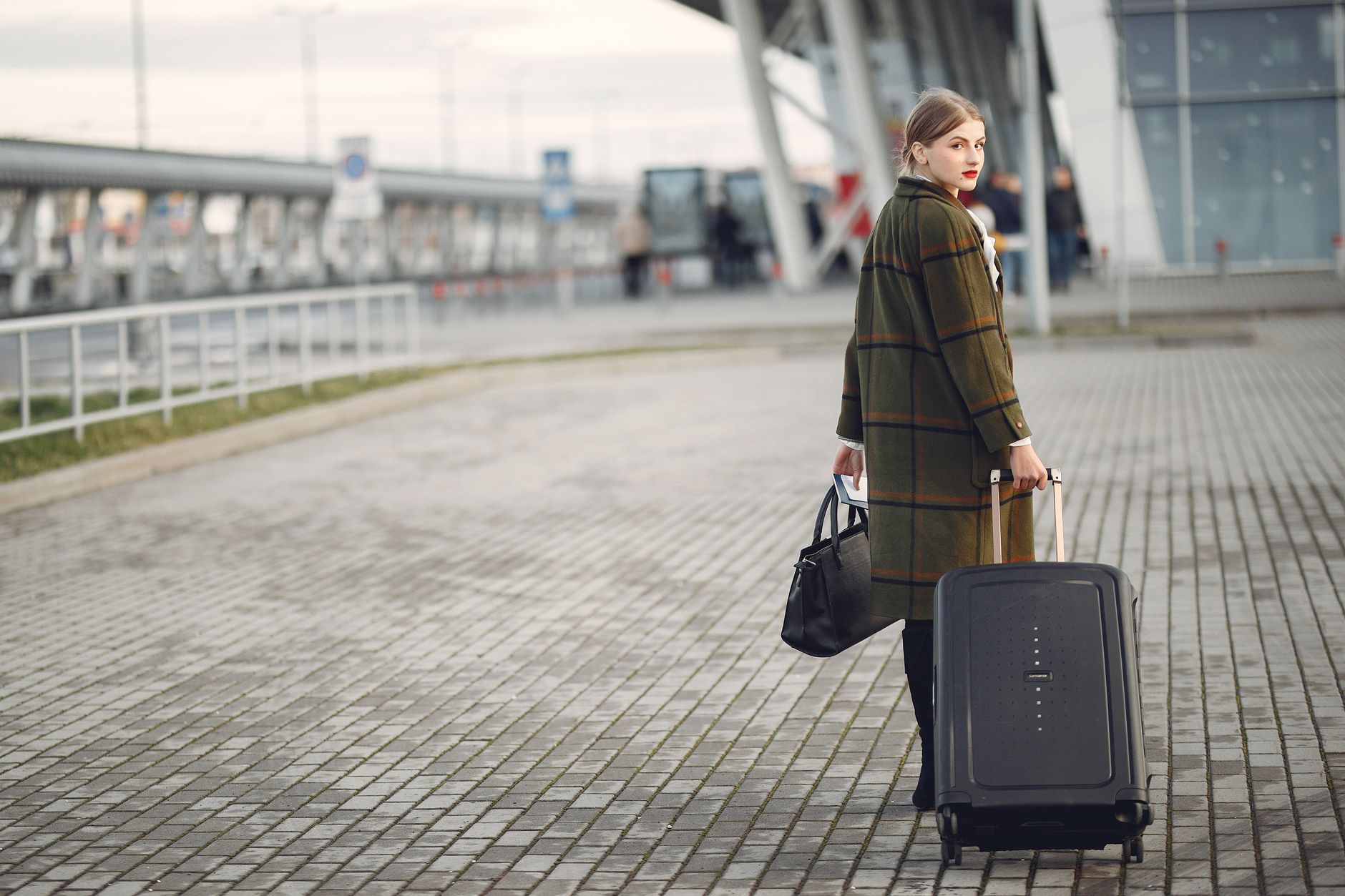
For decades hand luggage was the last thing you could take for granted in an air fare. That ended this summer — at the airline where you’d least have expected it. Meanwhile the EU has decided to reverse exactly that. Both happened in the same year, and you’re standing between them at the gate with a suitcase.
Let’s sort it out.
What changed at Lufthansa on 19 May 2026
Since 19 May 2026 Lufthansa has had a new entry-level fare, Economy Basic — and it includes no cabin case at all. You may bring one personal item: a laptop bag, a rucksack, a handbag, maximum 40 × 30 × 15 cm, and it has to fit under the seat in front.
Want a cabin case, or a bag in the hold? That costs from €15 on top. The rule applies across the group, so Eurowings, Swiss and Austrian Airlines too.
That ends a decades-old practice, and for booking it means one thing above all: the Lufthansa price you see is no longer directly comparable with the Ryanair price you see. You have to click together the same package on both before you can put two numbers side by side.
On Lufthansa’s higher fares nothing has changed: one cabin case up to 55 × 40 × 23 cm at 8 kg, plus the personal item.
The allowances compared (as of 2026)
| Airline | Included free | Larger cabin bag | Weight |
|---|---|---|---|
| Lufthansa, Economy Basic | 40 × 30 × 15 cm | from €15 extra | – |
| Lufthansa, higher fares | 40 × 30 × 15 cm | 55 × 40 × 23 cm | 8 kg |
| Ryanair | 40 × 30 × 20 cm | 55 × 40 × 20 cm (Priority only) | – |
| easyJet | 45 × 36 × 20 cm | bookable | 15 kg |
| Eurowings, Basic | 40 × 30 × 25 cm | 55 × 40 × 23 cm (option) | none on Basic |
| Wizz Air | 40 × 30 × 20 cm | 55 × 40 × 23 cm (chargeable) | – |
| Condor (since 1 May 2026) | 40 × 30 × 10 cm | 55 × 40 × 20 cm (Economy Classic) | 8 kg combined |
Two things stand out immediately. First, on the free small item Condor’s 10 cm depth is the tightest figure in the field — no ordinary rucksack goes through that, only a flat bag. Second, easyJet is comfortably the most generous on the free allowance at 45 × 36 × 20 cm and 15 kg.
A correction on the Condor row: those figures describe the position up to 30 April 2026 — Condor now allows 55 × 40 × 23 cm and 40 × 30 × 15 cm, with the eight kilos still covering both pieces combined; the full matrix by fare and flight zone is set out under Condor hand luggage.
On the Wizz row: Wizz sets a 10 kg limit for each of the two items, and the trolley only comes on board through WIZZ Priority — what that costs online, at the airport and at the gate is set out under Wizz Air hand luggage.
Not in the table, but worth knowing for trips to Turkey: Turkish Airlines allows 55 × 40 × 23 cm at 8 kg plus 40 × 30 × 15 cm at 4 kg on every Economy fare, whereas its subsidiary AJet has, since December 2025, carried only the under-seat bag on its international Basic fare – details under Turkish Airlines hand luggage.
The one size that clears almost everything
If you’re buying a case that works across all six airlines, the arithmetic is simple: take the smallest figure in each column.
For the larger cabin bag that gives 55 × 40 × 20 cm. Ryanair and Condor cap the depth at 20 cm; Lufthansa, Eurowings and Wizz allow 23 cm. So a case 20 cm deep fits everywhere, while a 23 cm case fails at two of the six.
On weight, 8 kg is the binding constraint, because that’s where Lufthansa and Condor sit. easyJet’s 15 kg is no help if you also fly Lufthansa that year.
55 × 40 × 20 cm and under 8 kg — that’s the specification you’ll never have to argue about. One thing from experience: check that the manufacturer’s stated dimensions include the wheels and handle. Plenty of cases are advertised at their shell measurement and stand two or three centimetres taller once wheels are counted — precisely the two centimetres that fail in the sizer.
Why weight catches people out more often than size
You check the dimensions once, when you buy the case, and never again. The weight changes on every trip.
An empty hard-shell case this size already weighs between 2 and 3 kg on its own. Against an 8 kg limit that leaves you roughly 5 kg of contents — and a laptop with its charger eats about 2 kg of that. Do the sums honestly before you pack, not at the airport.
Two things that help. Shoes and a jacket are the heaviest single items and belong on your body, not in the case. And most airlines measure the personal item rather than weighing it — so the small heavy things, cables, power bank, book, belong in the bag going under the seat.
Soft bag or hard shell?
The dimensions table treats every bag as a rigid box. Reality doesn’t, and that works in your favour.
A soft holdall compresses. Pushed into a sizer it gives by a centimetre or two, which is often exactly the margin between passing and paying. It also weighs noticeably less empty — typically a kilo or more below a hard-shell case of the same capacity, and on an 8 kg limit that kilo is around a fifth of your usable contents.
A hard shell protects and packs squarer. It’s the better choice if you carry a laptop, camera equipment or anything fragile, and it stands up on its own at the gate.
The honest recommendation for hand-luggage-only travel is the soft bag, precisely because of the sizer. The exception is if you routinely gate-check: a soft bag in the hold takes a beating a hard shell shrugs off.
One accessory worth the money either way: compression cubes. They don’t reduce weight, but they let you fit a soft bag into a shape that clears the frame — and they make the difference between repacking on the floor at the gate and walking straight through.
What the EU changes from 2027
In mid-June 2026 the Council and the European Parliament agreed a reform of air passenger rights, and on 7 July 2026 Parliament voted on the conciliation outcome. The part that matters to you: hand luggage must in future be included as standard in the advertised fare — one personal item and one small cabin bag.
Parliament’s position sets a ceiling of 100 cm total across length, width and height, at a maximum of 7 kg. The new provisions take effect from the second half of 2027.
Two practical consequences. First, Lufthansa’s May change has an expiry date — it runs for roughly a year before the EU rule bites. Second, until then nothing changes for you: if you’re flying in 2026 you plan around 2026 fares, not a 2027 regulation. And treat that 100 cm figure with care: 55 + 40 + 20 comes to exactly 115 cm. How airlines will implement it is still an open question.
At the gate: how the check really works
The sizer is rarely at check-in and almost always at the gate, shortly before boarding. Checks are done on a sample basis rather than universally — and markedly more often on full flights, because that’s when overhead space runs short.
If your case doesn’t fit the frame, it goes into the hold at the gate. That costs, and considerably more than it would have at booking: gate fees at the low-cost carriers routinely run to several times what the same bag would have cost online. If you suspect while packing that it’ll be tight, add the bag in advance — this is the most expensive avoidable mistake on any flight.
Two details that regularly surprise people. Duty-free purchases count as an additional item with some airlines and not with others. And on connecting flights the strictest rule among the carriers applies, not the first one’s. Fly Lufthansa to Vienna and transfer onto a holiday carrier there, and you’re bound by whichever of the two is tighter.
What you may not pack at all, and how the 100 ml liquids rule is handled at individual airports, is under Departure & Security; routes and timings at the major German airports are under The Airports.
The comparison worth making before you book
Because hand luggage is now a separately priced product almost everywhere, the headline fare has stopped being a meaningful basis for comparison. Work it out like this instead.
Take the advertised price, add the fee for the bag you actually need, and — on Ryanair and Wizz — add seat selection if two of you want to sit together. Only that total is comparable. On short city breaks with little luggage the low-cost carrier often still comes out ahead; add a case and an allocated seat and the gap to Lufthansa regularly shrinks to a few euros. What the checked bag actually contributes to that total — and why the same case costs twice as much at the desk as it does at booking — is covered under excess and checked baggage fees.
What the process actually looks like on the day is set out under departures at Stuttgart; the rules on liquids I have written up separately under liquids in hand luggage.
If you’re flying Ryanair specifically, it’s worth knowing the two-tier system of a free small bag and a paid cabin bag, covered under Ryanair hand luggage.
Lufthansa’s own system of a cabin bag plus a personal item, including the new Economy Basic fare launched in May 2026, is covered in detail under Lufthansa hand luggage.
What else matters beyond bag dimensions for battery devices like toothbrushes, shavers and power banks is covered under electric toothbrush on a plane.
How backpacks specifically get checked at the gate, with extend frames and compression straps, is covered under backpack hand luggage.
That the carrier for a dog or cat gets exactly the same 55 × 40 × 23 centimetres, yet counts on top of your hand luggage and stops at eight kilos including the animal, is covered under flying with a dog or cat.
All figures are as of 2026. Airlines now revise their baggage rules several times a year — Condor changed on 1 May, Lufthansa on 19 May. Always check the dimensions in your own booking confirmation, because that’s where the fare you actually bought is recorded. And if you want to remember just one thing: 55 × 40 × 20 centimetres, eight kilos. That gets you through anywhere in 2026.
Keep reading
Departure & Security
Eurowings Hand Luggage 2026: BASIC, SMART and BIZclass Compared
Eurowings hand luggage 2026: dimensions for the small bag and the cabin case, what BASIC, SMART and BIZclass actually include, plus a comparison with Lufthansa and Ryanair. As of 2026.
Sophie Bauer14 August 2026
Departure & Security
Turkish Airlines Hand Luggage 2026: 8 kg overhead, 4 kg under the seat, and the AJet exception
Turkish Airlines hand luggage 2026: a 55 × 40 × 23 cm cabin bag up to 8 kg plus a 40 × 30 × 15 cm personal item up to 4 kg, two bags in Business, domestic flights, and why AJet's Basic fare no longer includes a cabin bag (as of September 2026).
Sophie Bauer25 September 2026
Departure & Security
Wizz Air Hand Luggage 2026: 40 × 30 × 20 Free, a Trolley Only With WIZZ Priority
Wizz Air hand luggage in 2026: a free 40 × 30 × 20 cm bag up to 10 kg, a 55 × 40 × 23 cm trolley only with WIZZ Priority, what Priority costs online and at the airport, and what awaits at the gate (as of September 2026).
Sophie Bauer25 September 2026
Departure & Security
Condor Hand Luggage 2026: Sizes, the 8 kg Rule and the Full Fare Matrix
Condor hand luggage 2026: 55 × 40 × 23 cm since 1 May, eight kilos for case and bag combined, Economy Zero from €9.99 — plus gate charges and the reservable overhead bin. As of 2026.
Sophie Bauer17 September 2026
Departure & Security
Power Banks on a Plane in 2026: Cabin Bags, Watt-Hours and Which Airlines Ban Using Them
Power banks on a plane in 2026: cabin baggage only, two at most, the 100 and 160 Wh thresholds — and which airlines ban charging on board, from Lufthansa to Ryanair and Wizz Air (as of September 2026).
Sophie Bauer25 September 2026