Nuremberg Airport: Terminal, Destinations and Getting There
Nuremberg is the only airport in Germany with its own subway station right outside the terminal — and after a record 2025, one of the country's fastest-growing airports too.

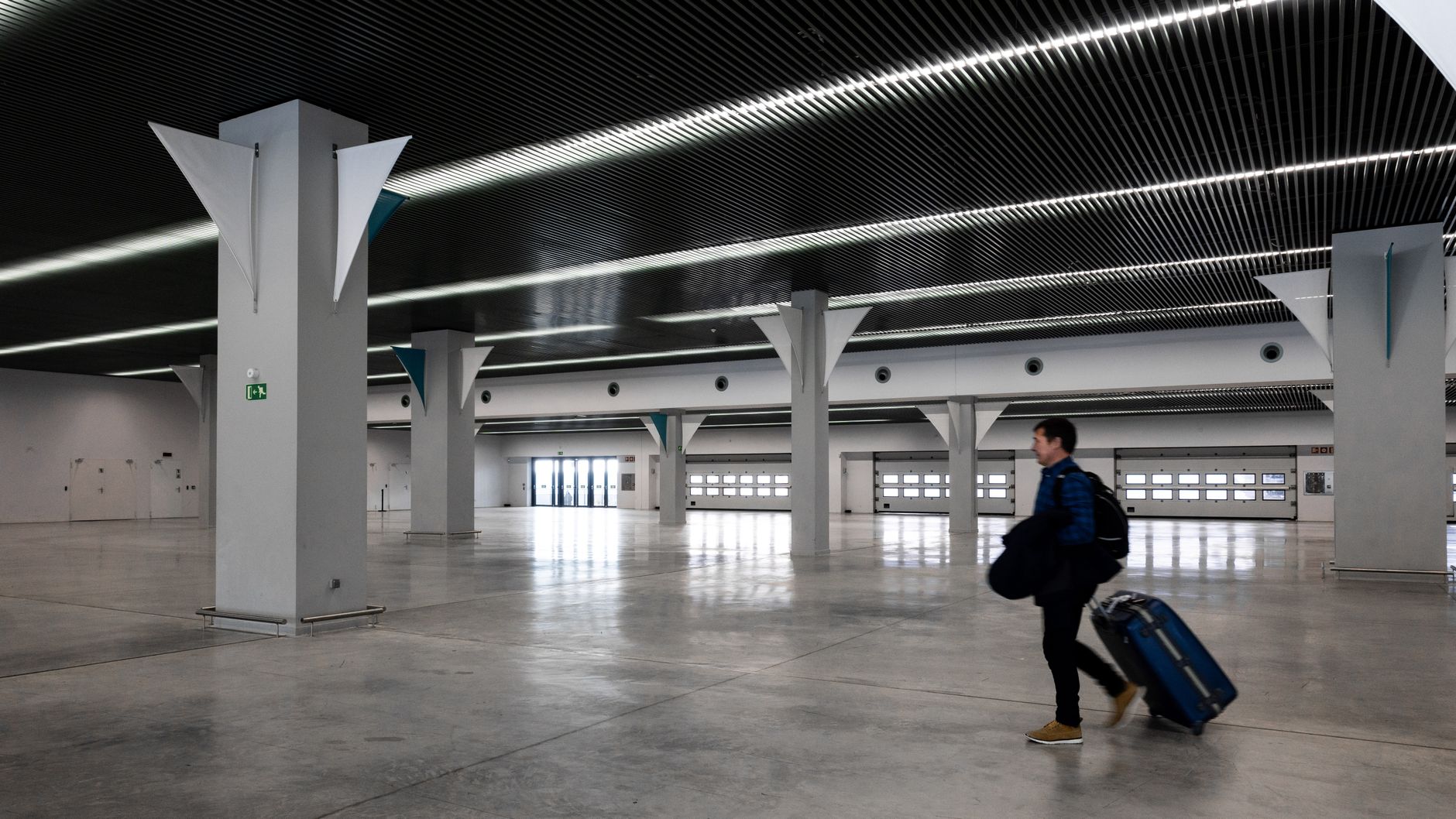
Land at Nuremberg Airport for the first time and you’re likely to be struck by how compact it feels — and how quickly it still gets you into the city. Officially named Albrecht Dürer Airport Nürnberg, after the city’s most famous Renaissance son, it now markets itself simply as “Airport Nürnberg” (IATA code NUE, ICAO EDDN). With around 4.5 million passengers in 2025, it’s Bavaria’s second-busiest airport after Munich — and yet you can walk from one end of the building to the other in a few minutes. There’s no skytrain, no endless corridors, but there is one thing no other German commercial airport still offers: a subway stop right outside the terminal that gets you into the city centre in about twelve minutes. This overview covers how the terminal is laid out, where you can fly to from here, the fastest way into town — and where to leave your car if you’re driving.
One terminal, two departure halls
Unlike the big hub airports, Nuremberg has just one terminal building, split into two departure halls with a shared arrivals area. You check in at Departure Hall 1 if you’re flying Ryanair or Wizz Air, while Departure Hall 2 houses the desks of every other airline, from Lufthansa and Eurowings to KLM and Swiss. That split matters before departure, when it decides which entrance you use; on arrival it barely registers, since everyone lands in the same area.
There are six gate positions close to the building, five of them with jet bridges, of which four are currently in operation (as of 2026). Ryanair, Wizz Air and other low-cost routes use three further positions right by the terminal that are reached on foot via the gate and stairwell — so occasionally you’ll walk across the apron to board rather than through a bridge. The airport markets itself on “short distances”, and that holds up in practice: check-in, security and gate rarely lie more than a few hundred metres apart. The terminal is designed for a capacity of around five million passengers a year, a figure the airport moved noticeably closer to with its record 2025. Beyond security, both levels offer dining, a small duty-free selection and seating areas overlooking the apron — nothing like the shopping miles of a major hub, but plenty for the short time you’re typically here.
A record year in 2025 — and how it got there
2025 was the most successful year in Nuremberg Airport’s history: around 4.51 million passengers (4,508,765, to be precise), up 11.9 per cent on the 4.03 million recorded in 2024. That comfortably beat the previous record from 2018, when the airport handled 4.47 million passengers — a milestone reached after years of depressed numbers caused by the pandemic and its aftermath. In 2023 the total was still 3.93 million. Average load factor in 2025 stood at a strong 83.2 per cent, and the numbers put Nuremberg in ninth place among German airports by passenger volume. That also puts the airport noticeably above its last normal pre-pandemic year, 2019, when it counted 4.11 million passengers — so this growth is real expansion, not simply catching up.
A big driver of that growth is holiday traffic: Antalya was by far the most popular destination from Nuremberg in 2025, with well over 600,000 passengers — a figure that also reflects Franconia’s close ties to its Turkish community. On top of that comes business travel linked to Messe Nürnberg, one of Germany’s larger trade fair operators, with events such as the Spielwarenmesse toy fair and Biofach, plus year-round city-break tourism into an old town that draws extra visitors every December for its Christmas market, the Christkindlesmarkt.
Airlines and destinations: from Antalya to Amsterdam
The airline mix at Nuremberg falls into three broad categories. Network carriers such as Lufthansa, Eurowings, Air France, KLM and Turkish Airlines connect through European hubs you can use to reach onward destinations worldwide. Leisure carriers Corendon Airlines, Marabu and SunExpress focus mainly on Mediterranean sun destinations. And the low-cost airlines Ryanair, Pegasus and Wizz Air cover a wide network across south-eastern and eastern Europe.
For the summer 2026 schedule, the airport is advertising around 60 non-stop destinations. Daily connections run to Frankfurt, Istanbul, Paris, Amsterdam and London Stansted — useful if you’re planning to connect onward to a long-haul flight, since there are no long-haul routes out of Nuremberg itself. The real weight of the network sits in leisure travel: Greek islands including Crete, Rhodes, Kos and Corfu, plus mainland destinations such as Thessaloniki, Preveza and Kavala; Spanish destinations from Mallorca and the Canaries to Alicante, Málaga, Valencia, Girona and Barcelona; and a dense network across the Balkans and eastern Europe covering Tirana, Bucharest, Brașov, Cluj-Napoca, Sibiu, Timișoara, Chișinău, Skopje, Belgrade, Vilnius and Budapest. If you live in Franconia or the Upper Palatinate, this is your gateway to the sun rather than to the whole world — for intercontinental flights, a connection is usually unavoidable.
Bavaria’s second airport
The current site opened on 6 April 1955, replacing the Marienberg airfield south of the city, which had been destroyed in the Second World War — the airport in the north of Nuremberg has grown steadily ever since, without ever taking on the scale of a major hub. Nuremberg Airport is owned in equal 50/50 shares by the City of Nuremberg and the Free State of Bavaria — a municipal-state structure that keeps it considerably smaller than the hub at Munich, which has far more capital behind it and a second terminal of its own. Even so, its catchment area is large: Middle Franconia, along with parts of the Upper Palatinate and Upper Franconia, have no meaningful alternative airport of their own and rely on Nuremberg, while Munich sits a good 170 kilometres away by motorway (via the A9 and A3) or roughly an hour by high-speed train.
Like Hannover, Nuremberg isn’t a transfer hub but a point-to-point airport — most passengers start or end their journey here rather than connecting onward. Alongside passenger traffic, the airport runs its own freight operation through the Cargo Center Nürnberg (CCN), small by comparison with Frankfurt or Leipzig but real nonetheless — around 4,700 tonnes of freight moved through it in 2025. Across the whole site, the airport says roughly 4,300 people work for more than 100 resident companies (as of 2025), from ground handlers and maintenance firms to logistics operators in the cargo business.
Twelve minutes into town on the U2
The airport’s real party trick only shows itself after you land: Nuremberg is the only commercial airport in Germany with a direct subway connection, ever since Berlin’s Tempelhof link disappeared. The U2 line stops right outside the terminal, and has done since November 1999 — the extension cost around 180 million Deutschmarks to build at the time.
| Journey time to Hauptbahnhof | around 12 minutes |
| Frequency | every 10 minutes, daytime |
| Ticket | single ticket, fare zone A (Nuremberg/Fürth/Stein) |
| Single fare | €3.90 at a machine, €3.65 digital (as of 2026) |
The U2 runs via Ziegelstein, Nordostbahnhof and Rathenauplatz straight to the Hauptbahnhof, then continues through the city centre down to Röthenbach in the south. For anyone arriving, that means: collect your bag, take a couple of escalators, buy a ticket at the machine — and you’re in Nuremberg’s old town without a transfer, a bus, or a search for parking. Compare that with Frankfurt-Hahn Airport, which has no rail link at all and leaves you with a bus ride of well over two hours to the nearest big city. That single subway stop makes Nuremberg one of the easiest German airports to reach without a car.
Bus, taxi and the Lufthansa link to Munich
If you’re heading out into the region rather than the city centre, bus lines 30 and 33 connect the airport with Fürth and Erlangen, with night bus N12 covering the late hours. Stops are right outside the terminal, and tickets are available through the VGN online shop among other outlets.
Taxis wait around the clock, right at the terminal exit. And for anyone connecting onward to a long-haul flight, there’s an option few other German regional airports offer: the Lufthansa Express Bus between Nuremberg and Munich Airport. It’s timed to match onward Lufthansa connections in Munich, luggage can be checked through on eligible bookings, and you get separate boarding passes for the bus and the flight. The Nuremberg stop is by car park P2, on the corner by the Hotel Mövenpick.
Driving in via the A3
For drivers, the airport sits in a genuinely convenient spot: the A3 motorway (Frankfurt–Nuremberg–Regensburg/Passau) runs right up to it, with the city centre around five kilometres away and roughly 15 minutes by car. One practical tip straight from the airport itself: enter “Airport Nürnberg” rather than “Flughafen Nürnberg” into sat-nav systems and map apps, since the latter can send some systems the wrong way.
Parking: from kiss-and-fly to the long-stay car park
Nuremberg Airport offers around 10,400 parking spaces in total, spread across areas right at the terminal and further-out lots. If you’re only dropping off or picking someone up, the Kiss & Fly zone right outside the terminal gives you eight minutes free, monitored by automatic number-plate recognition.
For a slightly longer wait, car parks P2 and P3, plus area P5, sit close to the terminal, with the first 15 minutes free before short-stay rates kick in. If you’re staying longer or leaving your car for the whole trip, car park P4 or the more distant long-stay area P31 are the better bet; the airport also offers ParkenPLUS, a premium option with shorter walks to the terminal. It’s worth booking the long-stay P31 area ahead of time, especially around school holidays, since it tends to fill up faster than the car parks right at the terminal. Daily rates vary by area, lead time and season, running roughly between €10 and €22 (as of 2026); weekly rates start from around €80 with early online booking and run noticeably higher at standard rates in P3 or P4. As so often, booking ahead online rather than paying at the barrier on the day tends to work out cheaper.
A considerably smaller regional airport with no railway station of its own at all is Dortmund, covered under Dortmund Airport arrivals.
An airport with a particularly long and publicly scrutinised construction history is BER, covered under Berlin Brandenburg Airport.
Nuremberg remains what it has been for decades: a compact regional airport with short walking distances that, in 2025, proved it can post serious passenger growth without ever becoming a transfer hub. Travel without a car and you get more benefit from the U2 than at any other German airport; drive yourself and you’ll find a manageable, clearly signposted set of parking options right at the terminal. For travellers from Franconia or the Upper Palatinate, size difference to Frankfurt or Munich aside, it usually remains the more practical choice whenever the destination you want is on the schedule. All figures on passenger numbers, journey times and parking charges reflect 2026 as reported by Nuremberg Airport, VAG and VGN — ticket prices and parking tariffs are usually adjusted annually, so check them again directly with the relevant operator shortly before you travel. You’ll find more German airports covered under The Airports.
Keep reading
The Airports
Parking at Munich Airport: The Minutes You Have to Budget For
Parking at Munich Airport: which car park serves Terminal 1 and 2, how long the shuttle and the walk really take, and when to leave home for an early flight.
Sophie Bauer14 August 2026
The Airports
Frankfurt Airport Terminal 1: Parking, Entrances, Levels
Parking at Frankfurt Terminal 1: the P2 and P3 entrances, the tunnel into the terminal, the 2.10 m height limit, where the pay machines are and the booking deadlines.
Sophie Bauer14 August 2026
The Airports
Parking at Frankfurt-Hahn: Three Surfaces and the 60-Minute Rule
Parking at Frankfurt-Hahn airport: P1, P2 and P3 with walking times and weekly rates, the height limit in the multi-storey, and the check-in deadline since Nov 2026.
Sophie Bauer14 August 2026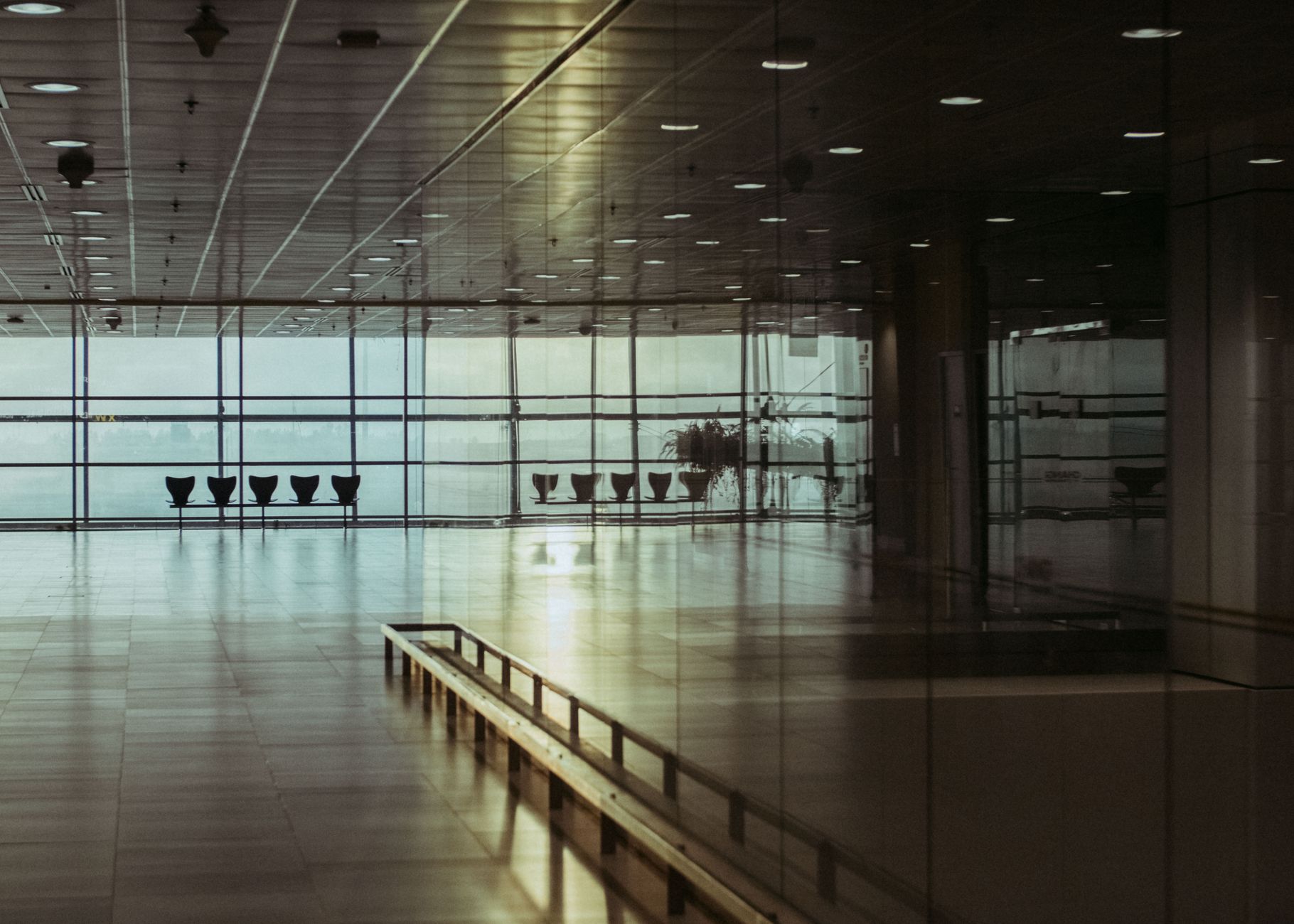
The Airports
Berlin Brandenburg Airport: Terminals, History and Getting There
Berlin Brandenburg Airport (BER): Terminal 1 and 2, fourteen years of delays before its 2020 opening, 26 million passengers in 2025, and how to reach the city.
Sophie Bauer21 July 2026
The Airports
Hotels at BER Airport: Which Ones You Can Actually Walk From
Hotels at Berlin Brandenburg Airport: the two houses on the Terminal 1 forecourt, the Schoenefeld and Waltersdorf ring, napcabs in the station, shuttle costs and park-sleep-fly compared.
Sophie Bauer17 September 2026